Small homes can still feel like adventure zones for cats. This page gathers space-smart resources so you can fit a stable tree into tight rooms, plan a vertical route, and set things up in a way your cat actually uses every day.
Quick Start
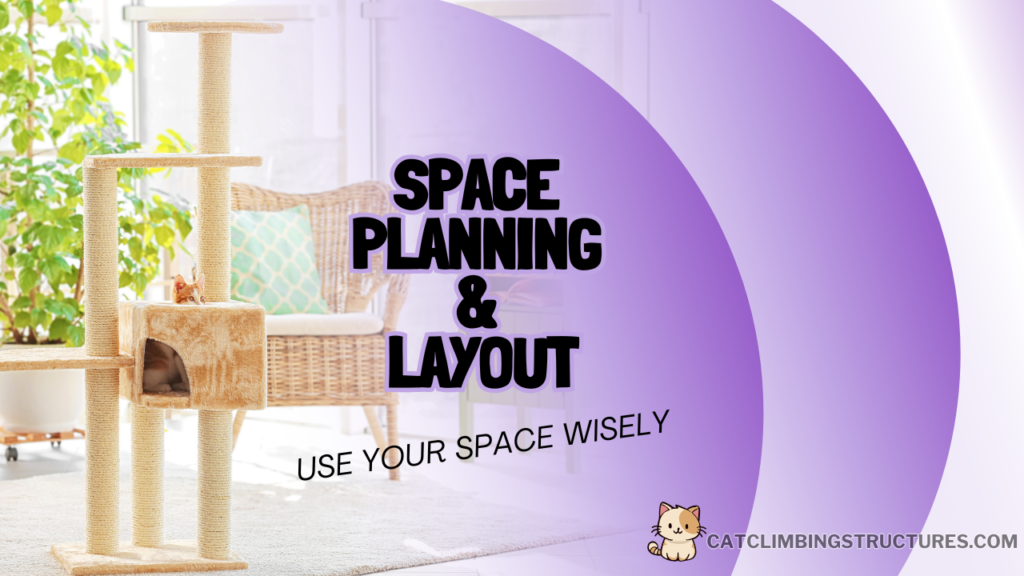
Space Planning & Layout
Pick the right corner, keep a clear approach path, and plan height that feels steady in tight rooms.

Best Cat Trees For Small Apartments
Compact, stable trees with clear steps and usable perches that won’t crowd your room.
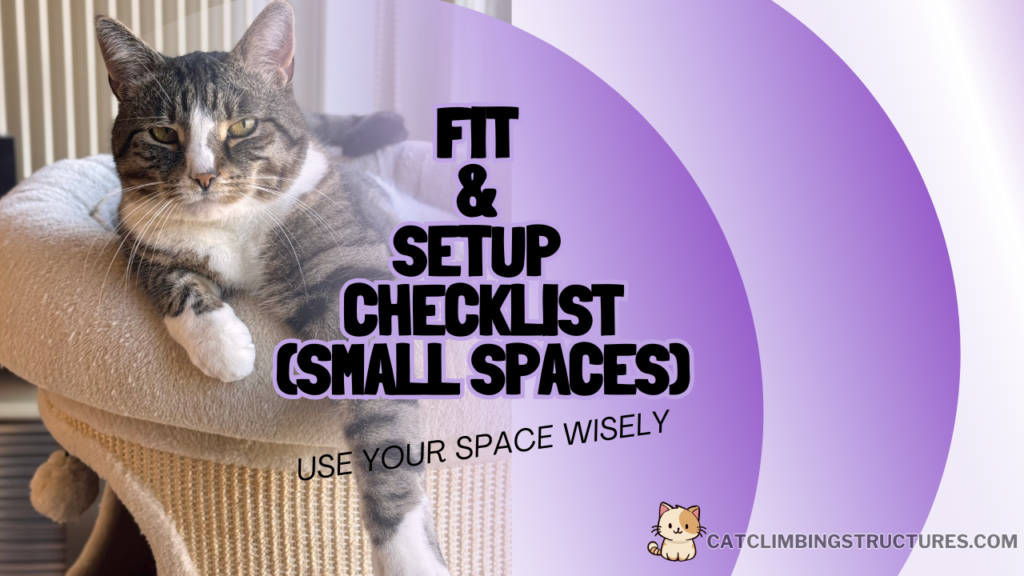
Fit & Setup Checklist (Small Spaces)
Quick specs and placement tips so a slim footprint still feels planted and safe.
Space Planning & Layout
Tight rooms reward smart placement. Think planted but slim footprints, clear approach paths, and vertical height that feels secure. Corners near windows or a main seating area usually drive the most daily use.
What to consider
- Footprint first: Pick the corner, then measure the base zone you can give up without blocking walkways.
- Height with confidence: Taller trees work in small rooms when they feel steady and have a simple step sequence.
- Traffic flow: Leave an easy path to the first step so your cat does not need to squeeze past furniture.
- Light and view: Windows boost use. If there is no window, face a perch toward where you sit so your cat still “watches the room.”
- Rental friendly: If you cannot drill, choose a planted base and add a non-slip underlay. If you can drill, a discreet anchor strap adds a lot of confidence.
Featured Reads (hand-picked 3)
- Placement Guide: Corners, Windows, Traffic Flow – Put the tree where it gets used daily by choosing a stable corner, clear approach path, and a perch with a view.
- Wall-Mounted Route Planning For Small Spaces – Turn a blank wall into vertical territory with stud-secure shelves spaced for easy step-ups and a true rest perch.
- DIY Slim Cat Tree (Weekend Build) – Build a compact, planted tree that fits tight rooms without sacrificing stability or usable perches.
Latest Articles (auto-updated)
-
10 Best Affordable Cat Trees That Are Actually Good Quality
Hey there! I’m going to be upfront and honest with you (which I do my best to be all the time but a little reassurance is needed from time to time…
-
The Types of Wall Mounted Cat Trees You Need To Know Before Building
The more I learn about cats and how they work, the more I grow in favor of wall mounted cat trees (and you should be too!). The only thing is that…
-
The Best Wall Mounted Cat Tree [CatastrophicCreation Review]
Wall mounted cat trees are the best cat furniture for cats because they are intricately designed structures that are off the ground and are situated around the edge of any room…
Best Cat Trees For Small Apartments
See compact trees that prioritize stability, clear steps, and usable perches without swallowing your living room.
Fit & Setup Checklist (Small Spaces)
Sizing Cheat Sheet
| Spec | Target | Why It Matters |
|---|---|---|
| Base Footprint | ≤ 22 × 20 in (56 × 51 cm) and planted | Saves floor space while feeling steady |
| Post Diameter | ≥ 3.0 in (7.6 cm) | Feels secure and holds up to daily scratching |
| Perch Size | ≥ 16 × 13 in (41 × 33 cm) | Big enough to turn and settle on a compact tree |
| Height Range | 60–72 in with clear steps | Small footprint, big satisfaction if stable |
| Ceiling Clearance | 6–8 in below ceiling | Room to perch without feeling cramped |
| Anchor Plan | Anchor tall builds where possible | Reduces top-perch movement in tight rooms |
Placement & Day-One Setup
- Put the base fully flat, then add a thin non-slip underlay on slick floors.
- Face the first step toward open floor, not a wall.
- Do a wobble test after assembly and re-snug hardware in a week.
- If the room echoes, add a soft mat under the base to soften sound and sliding.
Wall-Mounted In Small Spaces
Stud-secure shelves free the floor and turn blank walls into climbable routes. Space shelves 12–16 in apart vertically for easy step-ups, and create at least one 18 × 14 in rest spot.
Small-Space FAQs
What footprint fits a studio?
Aim for a planted base at or under 22 × 20 in. Corners make compact bases feel more stable.
Are tall, slim trees safe in apartments?
Yes, when the base is planted, steps are logical, and the tree is anchored if it is very tall.
Where should I place the tree in a small living room?
Corner near a window or seating area with a clear approach path to the first step.
Can I use wall-mounted shelves if I rent?
Ask first. If drilling is allowed, mount into studs with proper anchors. If not, choose a planted freestanding tree.
How do I keep the base from sliding on wood or tile?
Use a thin non-slip underlay trimmed to the base and re-snug hardware after a week.